

Town-by-town tick data
For $20, scientists at UMaine will analyze ticks for various pathogens
June 15, 2026
By Jessi Hardy
BLUE HILL-Thousands of ticks find their way onto us each summer. Thousands more find their way to a lab in Orono to be studied.
The University of Maine's Tick Lab plays a critical role in monitoring these arachnids through voluntary samples sent to their scientists by Mainers, continuing a long-term data project that dates back to the late 1980s. While originally focused solely on species identification to track geographic distribution, the program has evolved to include pathogen testing.
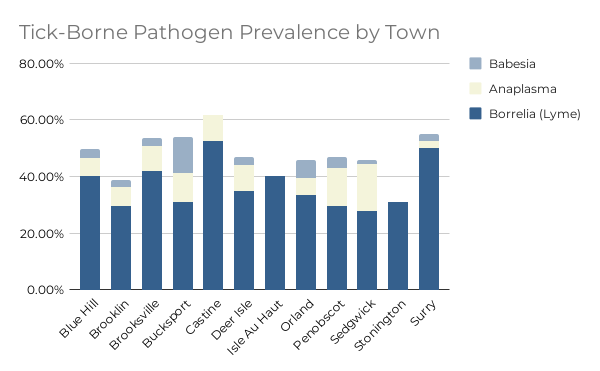
A graph showing the percentages of pathogens found in tick samples submitted to UMaine’s Tick Lab in 2025.
By utilizing testing to determine what bacteria or viruses a specific tick is carrying, the lab provides valuable information on pathogen prevalence and helps individuals understand the specific risks associated with the ticks they encounter.
"Deer ticks are active really heavily in the fall, and then again in the spring," said Griffin Dill, Extension Professional Director at the Tick Lab University of Maine Cooperative Extension.
For $20, the Tick Lab will analyze specimens sent to it, testing for pathogens such as borrelia, which can lead to Lyme disease, as well as babeosis or anaplasmosis. A large portion of the deer ticks submitted to the lab carry borrelia.
The lab even collects town-by-town data to see what pathogens show up on submitted samples. In 2025, the lab studied a total of 5,486 ticks submitted from 411 towns across Maine and representing all of Maine’s 16 counties. nThe total included 4,035 deer ticks, 1,376 dog ticks, and 30 lone star ticks.
Tick numbers seem abnormally high at the moment, Dill said, but this perception is frequently due to biological timing rather than an unprecedented population explosion. Currently, the ticks have multiple life stages and several species are active simultaneously: adult deer ticks, deer tick nymphs, and adult dog ticks.
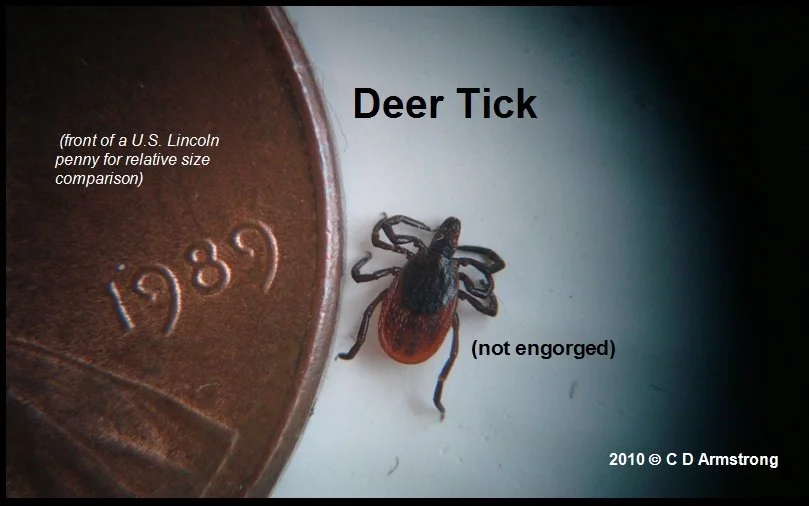
Deer ticks are about the size of the date on a penny, making them hard to find. Photo courtesy of the UMaine Tick Lab.
The deer tick is the primary public health concern due to its ability to transmit Lyme disease and other pathogens. In contrast, dog ticks in Maine are currently considered more of a nuisance; they are larger and more noticeable but are not known to transmit pathogens in the state at this time.
“They [ticks] have some different kinds of habitats and weather tolerances. The deer tick really dries out quite easily. So they tend to be found in areas where there's not a lot of exposure to sunlight and winds, a place where there's a lot of vegetation” such as woods and the edges of forests.
“The dog tick is much hardier in that respect,” Dill said. “They can be out in open lawns and open fields, but even sometimes see them crawling up the sides of buildings and open fields.”
The lab makes it straightforward for residents to contribute to surveillance. The process begins with an online submission form to submit a tick. After receiving a sample number, residents place the tick in a plastic bag and mail it or drop it off at the Orono lab. Once received, the lab identifies the species under a microscope and performs a highly sensitive test to look directly for the DNA of pathogens within the tick, offering a different perspective than human diagnostic tests that look for antibodies.
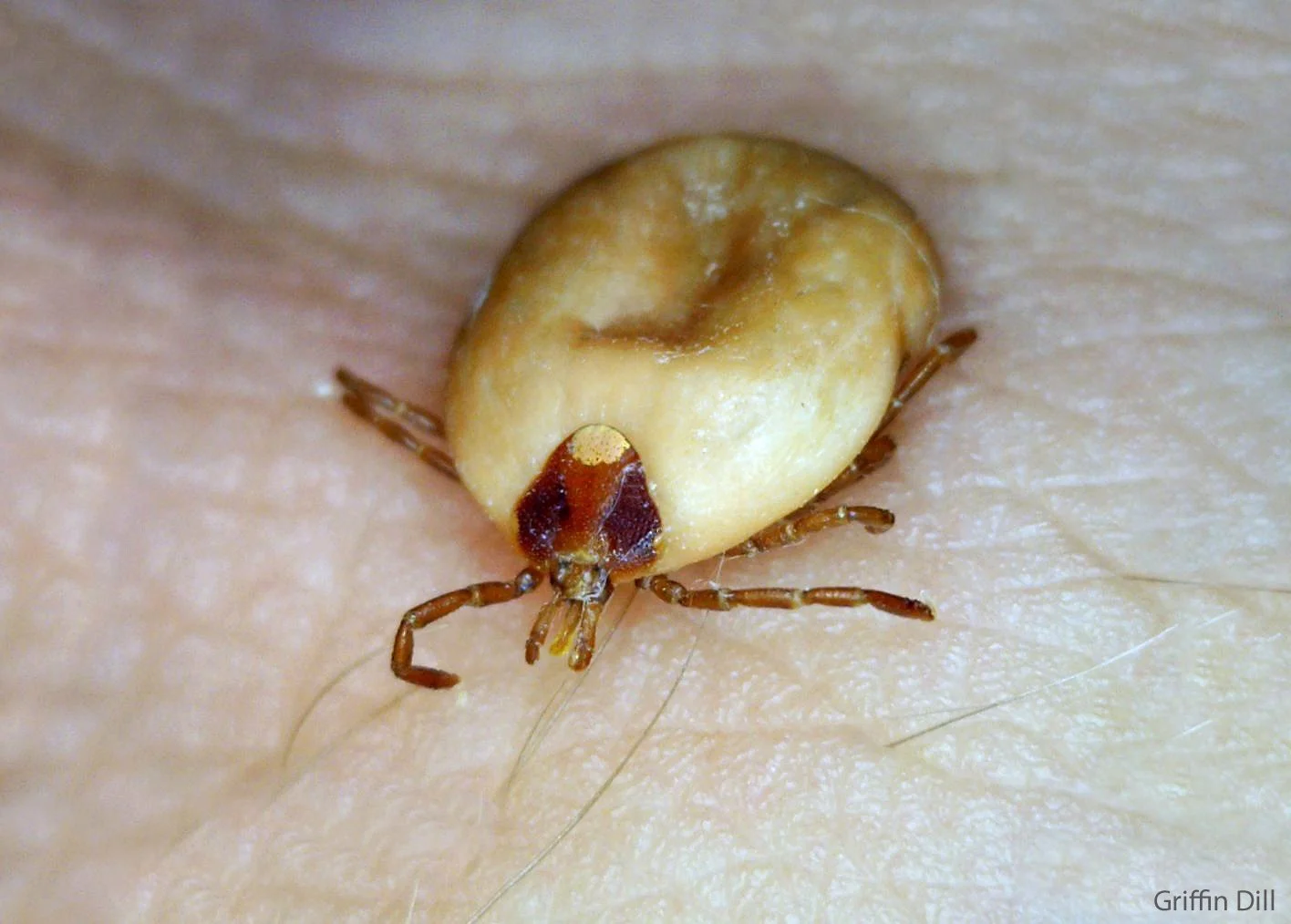
The lone star tick is common in the southern United States and is relatively rare in Maine. These ticks like drier forested areas along rivers and streams where animals rest. This small tick carries several severe tick-borne diseases and can affect humans and animals. Photo courtesy of the UMaine Tick Lab.
Dill cautioned that while a tick submitted to the lab may test positive for a pathogen, it does not conclusively mean the person submitting the tick has been infected. “Consulting with a physician should not wait until tick testing results are available,” the lab says on its website.
The data generated by the lab, which includes town-by-town tick-borne pathogen results, is shared widely to benefit public health. Findings are used for peer-reviewed journal articles and summarized in annual reports available on the lab's website. Additionally, the lab collaborates with a Maine CDC working group every other month to discuss findings. As the outreach branch of the university, the lab also conducts community presentations for garden clubs and local businesses to educate the public on tick ecology and protection.
To stay safe, experts recommend using EPA-approved repellents. For direct skin application, DEET and picaridin are the most effective options, offering several hours of protection compared to the much shorter window provided by essential oils. Permethrin is a repellent that can actually kill ticks on contact and remains effective through multiple washes, making it an excellent tool for those who spend significant time gardening or working outdoors. Using permethrin requires caution and following label instructions is highly recommended.
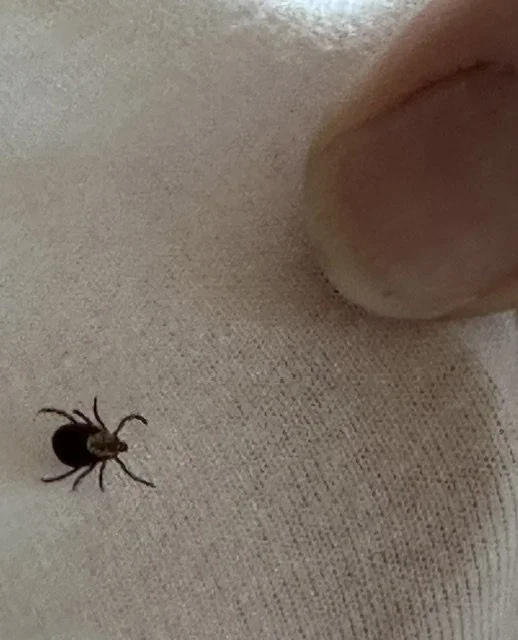
A dog tick. Photo by Jessica Hardy.
"You spray your clothes, let it dry, and then it's good for anywhere from 7 to 10 washes. You can also buy clothing that is pre-treated with permethrin, that lasts anywhere from 60 to 70 washes," Dill said.
The lab remains vigilant regarding invasive species. Constant monitoring is in place for the lone Star tick, known for causing red meat allergies. While some of these ticks have been found in Maine, established populations haven't.
Another concern is the Asian Longhorn tick, first reported in Maine last year. This species is unique because the females can reproduce and lay their eggs without mating.
By remaining informed and adopting simple habits—such as wearing protective clothing, using effective repellents, and conducting thorough tick checks after returning indoors—Mainers can continue to enjoy the outdoors with confidence. Awareness is the first step toward safety, ensuring that the "way life should be" remains healthy and active.
The lab also posts its annual reports online, including its most recent one from 2025. For more information about ticks, visit the Tick Lab website.
To learn more about possible hope for future vaccines of Lyme disease, see our recent coverage.
